
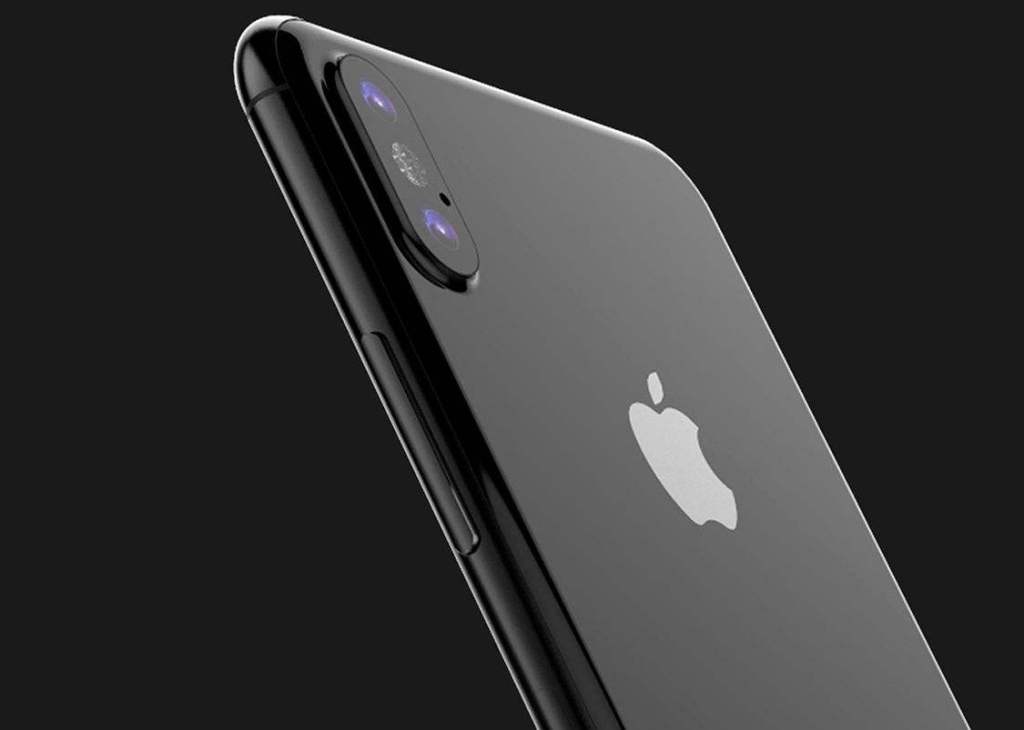
Guangdong is a super-province of China. It started rising in 1978, which is the year of the Reform and Opening Up. Because of the cheap labour, a lot of foreign capital poured into Pearl River Delta and Guangdong’s economy took off. After 40 years, the skyline of Shenzhen changed drastically but the business model is still the old style, which is original equipment manufacturing (OEM).
I visited a typical Guangdong OEM factory with my fellow students today. The factory belongs to Luen Fung Group (LF), which is a Hong Kong-owned enterprise located in Dongguan, a manufacturing hub in Guangdong. It produces precision components for electronic products of Apple Inc, such as iPhone and iWatch. It also started doing diversified businesses in recent years. LF resembles Hon Hai Precision, which is another OEM for resembling iPhones run by Terry Gou, Taiwan’s richest man.
Because of the restriction of taking photos, I can just describe what I saw in words. Firstly, I was guided by the staff of LF. They took us to visit different workshops. Our first stop was the testing centre. This centre tests the reliability of the product’s materials and the size of the finished products. On the two sides of the corridor are analysis labs. In these labs, workers run analysis on materials and products using advanced testing instruments. The instruments are imported from abroad, such as Shimadzu Manufacturing and Olympus of Japan, Titon of Switzerland, OGP of America, Karl Zeiss from Germany, etc. The testing standards quite strict. The chief technician said the standard is 9-sigma and the testing method is continuously improving. The sampling method they use is AQL, which means randomly pick 20 items from every 500 items. The testing equipment is required by clients. Apple Inc requires the highest standard machine and they compensate LF for it. Not many years ago, LF used manual testing and now they are completely mechanized.
The next stop was the lathe cutter workshop. LF produces lathe cutters on its own because it is cheaper and can be more customized for manufacturing. The cutters are made for general lathes and computer numerical control (CNC) lathes. The service lives of cutters various on the softness of the cutting object. If the cutter becomes blunt, the worker will remove the current cutter and make a new cutter based on the same block. The cutter makers’ brand is called Romantic, which are imported from Switzerland and cost more than a quarter million USD per maker. After the cutters are finished, workers paint layer on the cutter, in which process also has an automatic painting machine.
Then we went to the lathe workshop, in which they produce USB data line interfaces for iPhone. These interfaces are processed in a Swiss machine whose brand is called Galileo. Before the semi-finished interfaces go into the Swiss machine, they already seem to have no difference with the finished ones seeing with the naked eye, but actually, the precision is far from required. Processed by the Swiss machine, their accuracy can reach micron level. These are just general lathes, the precision of CNC lathes can reach even smaller. Ironically, the CNC lathes, the core mechanics of LF, are also purely imported from Switzerland, whose brand is called Fanuc.
Though LF states equality between Hong Kong and Mainland Chinese employees, it is significantly inclined to Hong Kongers. There is a fine apartment building in the factory park and only Hong Kong employees can reside in that building and the apartments are sold to them at an extremely low price, while mainland workers need to rent houses in the messy neighbourhood. Chinese workers are working in a hostile environment. In order to reduce the cost, there is no decoration in the workshop and the floor is unpaved. In the crumbling board, workshop placed million dollar Swiss machines. What a contrast. The workers are working for the longest time with the lowest wage. An average worker earns about $200 per month.
LF is a lucrative company, it has thousands of orders from clients in Silicon Valley. Besides Apple Inc, other technology firms such as Tesla, Microsoft, Google X, Boeing are all LF’s big clients. LF receives the order from American clients and realises their product blueprints by Swiss machines; this is all its job as an OEM. It doesn’t produce for itself or for any Chinese clients. Few people know that their $1,000 iPhones are produced by low-paid workers in an OEM sweatshop in Guangdong, China.
Foreign capitalists like Terry Gous and LFs very much, for these Chinese OEMs, make their smartphone and laptop companies survive. Without Terry Gou and LF, the price American technology products will soar and they will be absolutely defeated by Chinese local brands.
So many years passed, the business model of Guangdong seems to be the same. LF has little technological competitiveness besides so-called automation and system management. Its main competency is still the cost of labour and land. It faces many challenges, from the Sino-US trade war in the short-term and rising labour and land cost in the long-term. I really hope there will be less OEM sweatshops and more core technologies and well-known brands in China.


 Qizhou (Robin) Luo
留下评论