
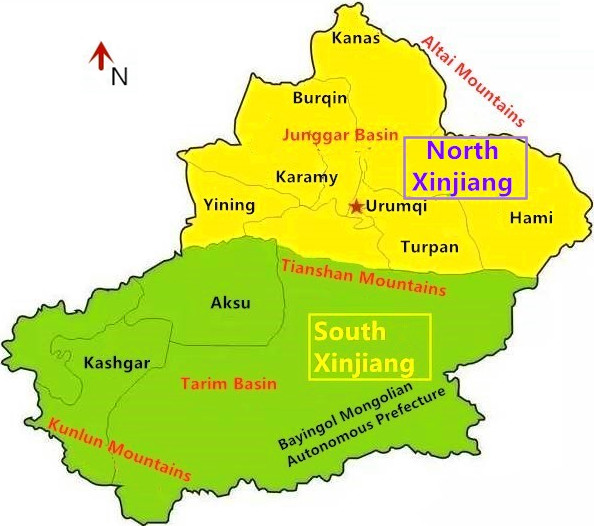
Xinjiang, an autonomous region located in the northwest China, has been facing poverty issues throughout its history. Despite owning abundant natural resources, it is still among the poorest regions in China. Therefore, reducing poverty is imminent. To eliminate the poverty in Xinjiang, the central and local governments have taken various actions.
In 2010, the Chinese government started the unprecedented pairing poverty alleviation program. It features pairs between eastern rich provinces and the underdeveloped Xinjiang counties. The program has been effective since its inception. It successfully lifted millions of people, especially those in the rural areas, out of poverty.
As a matter of fact, Xinjiang is rich in natural resources, including oil, coal mines, and many more. As China’s economy develops rapidly, the eastern regions are in desperate need of natural resources to fuel their industrial development. China has initiated several big projects in order to help transfer natural resource in Xinjiang to eastern provinces, of which the electricity transport project is a prominent example.
There are numerous factors in poverty alleviation. Education is playing the central role in poverty reduction. In recent years, China has been financing heavily in school constructions so as to elevate the educational level of Xinjiang population. Even many teachers voluntarily relocate in Xinjiang to teach the kids in schools lack of eligible teachers.
These measures show the determination of the CCP to eradicate poverty in Xinjiang. Of course, people in Xinjiang are in the dominant roles to make things happen. In the foreseeable future, Xinjiang will probably be an economic powerhouse for the whole China and around the globe.

 Qizhou (Robin) Luo
留下评论